Aurora Dog Laws: Leash, License, Rabies and Barking Rules
General training information. For aggression, sudden behavior changes or health concerns, see your veterinarian first.
Knowing the Aurora dog laws is part of good dog care here. The rules shape how you walk, where you let your dog run and what paperwork you keep on hand. They also give you good reasons to practice leash manners and a reliable recall.
This guide walks through each rule in order. For each one you will see what the city says, what it means for training and what to do next. Where a rule could not be confirmed, we say so and point you to the city.
What You Need Before You Start
- A standard leash that is no longer than 10 feet.
- A flat collar or a well-fitted harness, plus a current ID tag.
- Your dog's current rabies certificate from your veterinarian.
- Any spay or neuter paperwork from your veterinarian, if your dog is fixed.
- Proof of age, if you are 65 or older and plan to ask for the senior discount.
- Small, soft treats for rewarding good choices on walks.
- Waste bags, one for each dog.
Dogs also need a minute to settle into any new routine, so give yourself patience too.
Step 1: Follow the Aurora Leash Law
City of Aurora Animal Services (Dog Basics page) says a dog off its owner's property must be on a leash no longer than 10 feet. The person holding the leash must be physically able to control the dog. If you tether your dog, the tether must be at least 6 feet long.
The city page does not list a code section. An older published summary of Aurora Municipal Code Chapter 14 (Animal Legal and Historical Center, last checked in 2012) cites Sec. 14-5(a)(1) for the leash rule. Because that summary is old, confirm the current section with Aurora Animal Services if you need the exact wording.
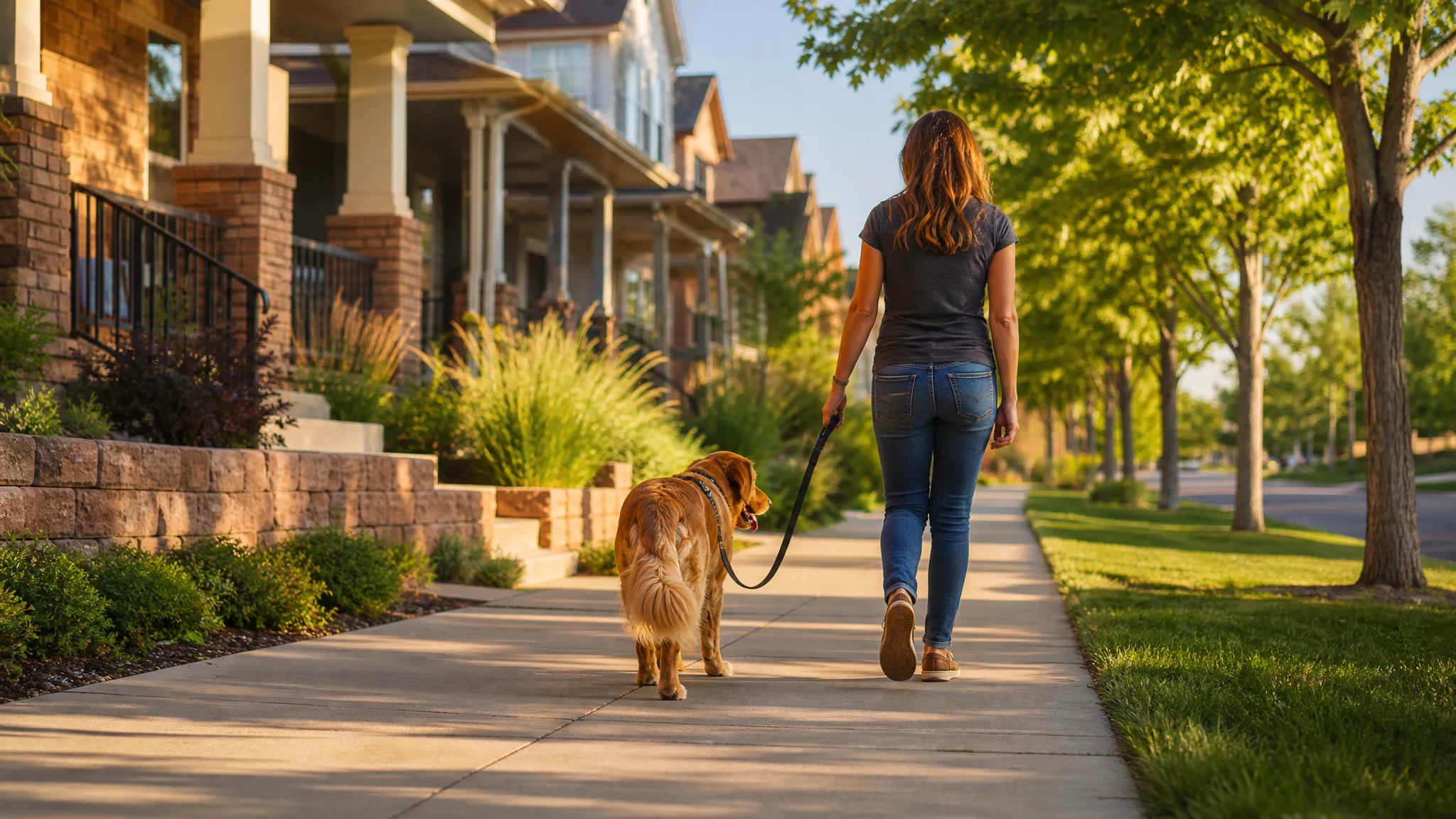
What it means for training: The Aurora leash law is a limit, not a goal. A 10-foot leash is the longest the city allows. Many dogs learn faster on a shorter one, because you can guide them without tugging. The real task is teaching your dog to stay near you whatever the length.
Try this loose-leash routine:
- Start in a quiet spot, like your living room or backyard.
- Reward your dog with a treat whenever the leash hangs in a relaxed "J" shape beside you.
- When your dog pulls, stop walking. Wait for the leash to loosen, then say "yes" and reward.
- Move to the sidewalk and repeat. Add distractions one at a time.
Use a flat collar or a front-clip harness. Training should never rely on shock, prong or choke collars. The American Veterinary Society of Animal Behavior (AVSAB) advises reward-based methods because they build trust and carry less risk of fear and injury.
Step 2: License Your Dog Through the Aurora Animal Shelter
The Aurora dog license is required for every dog and cat over 6 months old. City of Aurora Animal Services (Licenses page) says the Aurora Animal Shelter issues the tag. A current rabies certificate is required, and expired certificates are not accepted.
Here are the fees listed by City of Aurora Animal Services:
| Dog status | 1 year | 3 years |
|---|---|---|
| Spayed or neutered | $15 | $41 |
| Not spayed or neutered | $53 | $156 |
Residents 65 or older with proof of age get a 50% discount on the spayed or neutered fees. There is no discount on the fees for dogs that are not spayed or neutered.
You may see lower prices quoted elsewhere online. Fees can change, so check the city's Licenses page or call the shelter before you pay.
What it means for training: A tag on your dog's collar helps a lost dog get home. A recall that comes with it gives you a second layer of safety. Practice the recall in short sessions:
- Pick a happy word, such as "here."
- Say it once in a low-distraction room, then reward with something your dog loves.
- Increase distance a little at a time.
- Practice in the yard on a long line before trying it anywhere busy.
Never call your dog to you and then do something unpleasant, like ending the fun or scolding. The recall should always pay off.
Step 3: Keep Rabies Vaccination Current
City of Aurora Animal Services (Dog Basics page) says dogs 6 months and older living within city limits must be current on rabies vaccination. As noted above, an expired certificate will not be accepted when you license your dog.
The older Chapter 14 summary cites Sec. 14-11(a), which refers to vaccination by a licensed veterinarian before 4 months of age. That summary is outdated and was not checked against the current code. Ask your veterinarian about timing, and check with the city for the current rule.
What it means for training: Rabies timing can overlap with the early months when puppies learn the most. Ask your veterinarian when it is safe for your puppy to meet other dogs and visit group classes. We could not confirm a single vaccine requirement for puppy classes, so ask the class provider what they require before you sign up.
Set a calendar reminder a month before the expiration date. That way the license renewal never gets held up by a lapsed certificate.
Step 4: Understand Barking and Nuisance Rules
The current City of Aurora Animal Services pages we reviewed do not address barking. The older Chapter 14 summary (Animal Legal and Historical Center, last checked in 2012) cites Sec. 14-72. It describes a dog that causes annoyance through frequent, habitual or continued barking, yelping or howling. It says a complaint needs two or more complaining witnesses from separate households.
We could not verify that language against the current code. Check with Aurora Animal Services before treating it as current law.
What it means for training: Barking is communication, and the cause matters. Common reasons include boredom, alerting to sounds, loneliness and excitement. Try these steps:
- Note when the barking happens and what comes right before it.
- Add exercise and chew toys or puzzle feeders to your dog's day.
- Block the view of the street if window watching sets your dog off.
- Reward quiet moments with a treat, before the barking starts again.
- Teach a calm "place" cue so your dog has something else to do when the doorbell rings.
A sudden change in barking can point to pain or illness. If it comes with other changes in behavior, see your veterinarian.
Step 5: Know the Dangerous Dog Rules
City of Aurora Animal Services (Prohibited Dog Breeds page) describes a newer dangerous-dog ordinance. It gives judges latitude to decide, based on a dog's behavior and actions, whether a dog of any breed poses a risk to the community. The same page says that since January 2025, residents may own American Pit Bull Terriers, American Staffordshire Terriers and Staffordshire Bull Terriers. These dogs must be licensed like any other dog.
The step-by-step process, including any conditions a judge can set, was not confirmed. Contact Aurora Animal Services or read the current municipal code for the details.
What it means for training: The focus is on what a dog does, not what breed it is. That makes good habits matter for every dog. Teach reliable leash manners, avoid situations your dog finds overwhelming and manage greetings with strangers and other dogs carefully.
If your dog growls, lunges or bites a person, do not try to fix it alone. See your veterinarian first to rule out pain or illness. Then work with a certified behavior professional. We could not confirm a specific behavior professional in Aurora, so ask your veterinarian for a referral.
Step 6: Stay Within the Four-Dog Limit
City of Aurora Animal Services (Dog Basics page) says the limit is four dogs per household. It applies to the entire household. The same page lists limits for other pets: cats 5, ferrets 3 and rabbits 2.
Aurora spans Arapahoe, Adams and Douglas counties, so rules for your address may differ. If you are close to the limit or are fostering, call Animal Services to confirm.
What it means for training: Multi-dog homes benefit from one-on-one sessions. Practice leash manners and recall with each dog alone first. Then walk them together once each one is steady.
Step 7: Practice Where Off-Leash Time Is Allowed
Off-leash play is a good way to use your recall. Visit Aurora (the city tourism site) lists these fenced areas:
- Grandview Dog Park, 17500 E Quincy Ave. It is free, covers about 5 acres and has separate areas for large and small dogs.
- Bicentennial Park Off-Leash Area, 13600 E Bayaud Ave. It is a fenced area of about 1 acre, open dawn to dusk.
- Singletree Park Dog Area, 19590 E 58th Ave. It is free, fully fenced and about 0.34 acres, open dawn to dusk.
Colorado Parks and Wildlife runs the Dog Off-Leash Area at Cherry Creek State Park. It is a state park, not a city one. CPW lists a $3 daily dog pass or a $25 annual pass, and each covers one handler with up to three dogs. A park entrance pass for vehicles is also required. CPW says dogs must stay within visual distance and under voice control. You must carry a leash and a waste bag for each dog. CPW also says the area is not fully fenced and notes seasonal closure dates, so check its page before you go.
Water safety matters too. The Colorado Department of Public Health and Environment warned in 2022, as reported by the Denver Gazette, that toxic blue-green algae blooms can kill pets, particularly dogs. Toxins were detected at Cherry Creek Reservoir that year. Check current CPW and CDPHE advisories before letting your dog near reservoir water. If your dog may have swallowed algae, call a veterinarian right away.
Tips and Common Mistakes
- Letting the leash grow too long in crowds. Keep it short near people, bikes and other dogs, even though the city allows up to 10 feet.
- Waiting until the last minute to license. Get your rabies certificate in order first, since an expired one is not accepted.
- Skipping recall practice. Voice control is a condition of the Cherry Creek off-leash area, so a dog without it is not ready.
- Using punishment for barking or pulling. It can add fear and stress. Reward the behavior you want instead.
- Assuming a breed rule applies. Aurora no longer treats the pit bull type breeds as banned, but licensing is required.
- Relying on old online summaries. Confirm any code section number with the city.
What to Expect
With short daily practice, many dogs begin to walk more calmly within a few weeks. Recall usually takes longer and often keeps improving for months. Results depend on your dog's age, history and the amount of distraction around. Progress is rarely a straight line, and that is normal.
Having your license, rabies certificate and ID in order may also make it easier to get a lost dog home. If you get stuck, a certified professional trainer can help. The Certification Council for Professional Dog Trainers (CCPDT) keeps a public directory of certified trainers, including some with an Aurora area listed.
Where to Check the Rules Yourself
Laws change, and some details here could not be confirmed. For the current text and any questions about your address, contact the Aurora Animal Shelter at 15750 E. 32nd Ave., Aurora, CO 80011, or call 303.326.8280.
Sources
- City of Aurora Animal Services, Dog Basics
- City of Aurora Animal Services, Licenses
- City of Aurora Animal Services, Prohibited Dog Breeds
- City of Aurora Animal Services, Aurora Animal Shelter
- Animal Legal and Historical Center, Aurora CO Chapter 14 (older summary)
- Colorado Parks and Wildlife, Cherry Creek State Park Dog Off-Leash Area
- Visit Aurora, Dog Parks
- Denver Gazette, reporting a CDPHE warning on toxic algae
- CCPDT Certified Dog Trainer Directory