Puppy Training in Aurora: Classes, Socialization and When to Start
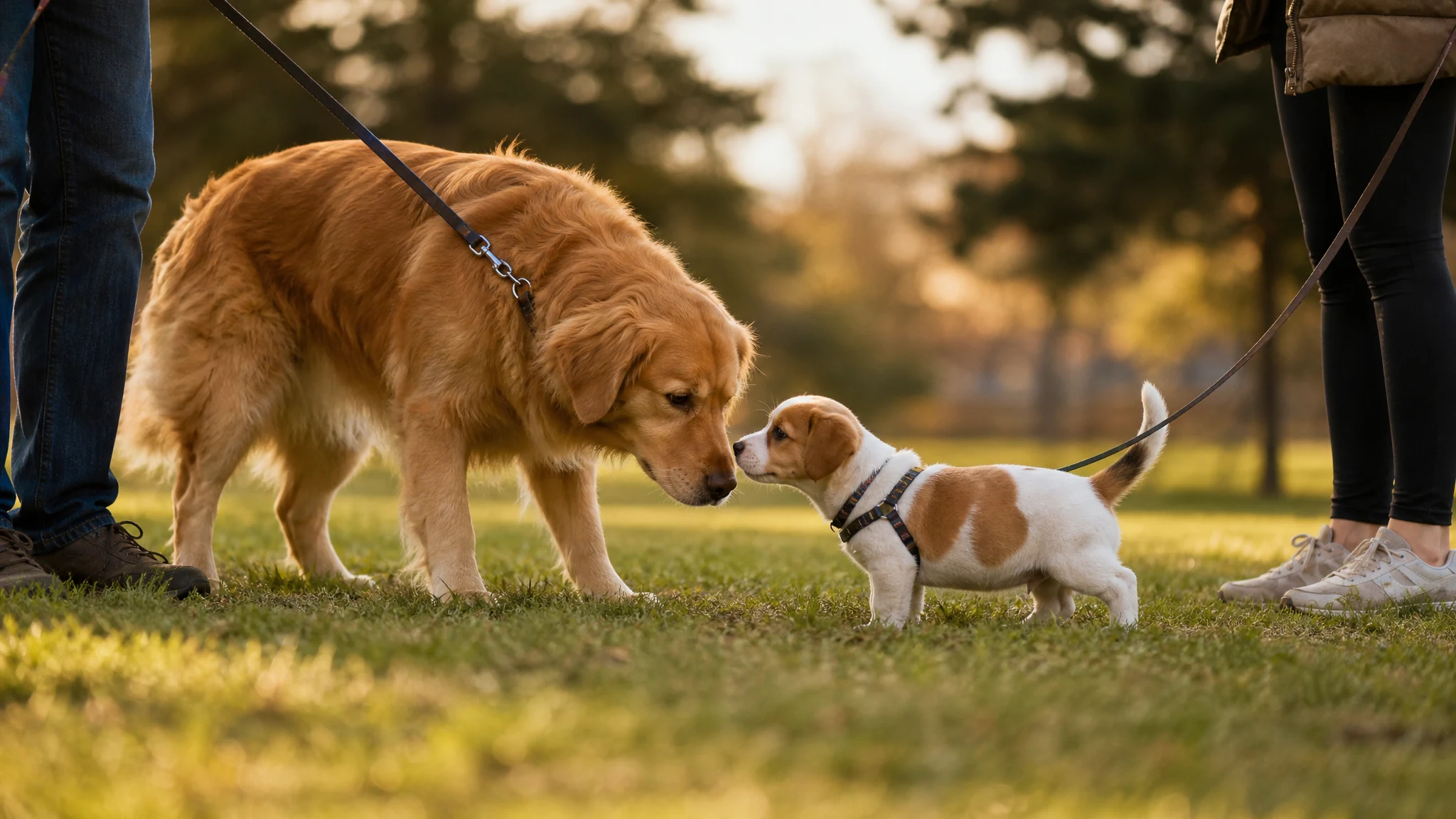
General training information. For aggression, sudden behavior changes or health concerns, see your veterinarian first.
Bringing a puppy home in Aurora is exciting, and it comes with a ticking clock. The first few months are when your puppy learns what the world is like, and what you do in that window matters. The good news is that you do not need fancy gear or a perfect plan. You need a routine, small rewards and a little local know-how.
This guide walks you through when to start puppy training, how to choose puppy training classes, how to socialize safely around Aurora, and what the first weeks at home can look like.
When to Start Puppy Training in Aurora
Start at home the day your puppy arrives. Name recognition, potty routines, calm handling and simple cues like "sit" can all begin right away, with no class required.
Formal classes are a separate question. Many owners assume they must wait until every puppy vaccine is finished. The American Veterinary Society of Animal Behavior (AVSAB) takes a different view in its puppy socialization position. It says puppy classes can start before the vaccine series is complete, as long as sensible precautions are in place. The reasoning is that the early weeks are a key learning period, and a lack of positive experiences can raise the risk of fear and behavior problems later.
"Precautions" matter here. Your own veterinarian knows your puppy's health, vaccine schedule and risks. Ask them when your puppy can join a class and what to avoid in the meantime. If your puppy seems sick, call the vet before going anywhere with other dogs.
What You Will Need
- Small, soft treats that your puppy can swallow fast. Pea-sized pieces work well.
- A flat buckle collar or a well-fitted harness, plus a standard leash. Aurora's city rules call for a leash no longer than 10 feet, so a 4 to 6 foot leash is a practical choice.
- A crate or a puppy-safe resting area.
- Chew toys and a few different textures to explore, such as a towel, a cardboard box and a yoga mat.
- Waste bags and a water bottle for outings.
- Your puppy's vaccine and health records from your veterinarian.
- Patience and a short-session mindset. Five minutes at a time is plenty.
Step-by-Step: Your Puppy's First Months
Step 1: Set up a routine in the first days
Puppies learn fastest when life is predictable. Pick regular times for meals, potty trips, play and naps. Take your puppy out after waking, after eating, after play and before bed. Reward right when they finish going outside, not after you are back in the house.
Expect accidents. If you find one, clean it with an enzymatic cleaner and move on. Scolding teaches a puppy to hide, not to go outside.
Step 2: Teach a few easy cues with treats
Begin with name response, "sit" and coming to you. For "sit," hold a treat just above your puppy's nose and slowly move it back over the head. When the rear touches the floor, say "yes" and give the treat. Do a few repeats, then stop while your puppy is still interested.
Reward-based training fits AVSAB guidance. You show the puppy what you want and pay them for it. You do not need to correct or frighten a puppy to teach good manners.
Step 3: Get your puppy comfortable with handling
Gently touch paws, ears, mouth and tail, then give a treat. Keep it brief and calm. This makes later vet exams, grooming and nail trims easier. If your puppy pulls away or tenses up, go slower and use smaller touches.
Step 4: Check the local rules before you go out
A few Aurora rules are worth knowing early:
- Leash. City of Aurora Animal Services says a dog off its owner's property must be on a leash no longer than 10 feet, held by a person physically able to control it.
- License. City of Aurora Animal Services says dogs over 6 months must be licensed through the Aurora Animal Shelter, and a current rabies certificate is required. Spayed or neutered dogs cost $15 for one year or $41 for three years. Dogs that are not spayed or neutered cost $53 for one year or $156 for three years. Residents 65 or older get a 50% discount for spayed or neutered dogs with proof of age.
- Rabies. The city says dogs 6 months and older living in city limits must be current on rabies vaccination. Your veterinarian will set your puppy's vaccine timing.
- Household limit. The city allows four dogs per household.
Aurora spans Arapahoe, Adams and Douglas counties, so check with the city or your county if you are unsure how a rule applies at your address.
Step 5: Choose a puppy class
Good puppy classes focus on four things: safe, supervised play, basic cues, handling practice and helping owners read puppy body language. Look for an instructor who uses treats, toys and praise, and who steps in when play gets too rough or a puppy looks overwhelmed.
Some Aurora trainers are listed in the Certification Council for Professional Dog Trainers (CCPDT) directory with the CPDT-KA credential, which stands for Certified Professional Dog Trainer, Knowledge Assessed. The directory lists trainers with Aurora service areas, including:
- Jennifer R. Fantasia of Happy Hounds Dog Training, listed in Aurora (80014). Their site also lists Denver, Centennial, Cherry Creek and other nearby areas.
- Patricia J. Blocker of Peaceful Paws Dog Training, listed in Aurora (80010).
- Erin Michelle Lukacovic, listed in Aurora (80013), with a website at elevationbehavior.com.
- Charleen M. Cordo, listed in Aurora (80015). Their profile mentions being a satellite trainer for Pets for Vets.
- Desirae Evelyn Audino, listed in Aurora.
This is a directory list, not a ranking or a recommendation. A listing does not tell you whether a trainer offers group puppy classes, private lessons or something else, so contact them directly and ask. A credential also does not replace a good fit, so watch a class if they allow it.
Step 6: Ask about vaccine requirements before you enroll
We could not confirm what any Aurora class requires for puppy vaccines. Each class sets its own policy. Some ask for a first round of shots, some want proof of a veterinarian's okay, and some ask for more. Call or email the trainer and ask exactly what paperwork they need and what cleaning steps they use for the training space.
Then talk to your veterinarian with those answers in hand. They can tell you whether your puppy is ready based on their health and the vaccines they have had so far.
Useful questions for any class:
- What vaccine proof do you need, and by what date?
- How many puppies are in a class, and what ages?
- Are play sessions supervised, and how do you handle a shy or pushy puppy?
- What training tools and methods do you use? (Reward-based is the answer you want.)
- What happens if my puppy is not ready on class day?
Step 7: Socialize in small, positive doses
Socialization does not mean letting your puppy meet every dog and person. It means pairing new things with good feelings. Let your puppy watch from a comfortable distance, give treats, and leave before they get worried.
A simple list to work through over several weeks:
- Surfaces: tile, grass, gravel, a metal grate, a wobbly board.
- Sounds: vacuum, doorbell, car doors, kids playing in the distance, traffic.
- People: different ages, hats, umbrellas, people carrying bags.
- Handling: a towel dry-off, a harness going on, a gentle brush.
- Vehicles: calm rides and short stops, always with treats.
Carry your puppy past scary things at first if needed. Keep outings short, and let your puppy rest in between.
Socialization Around Aurora
Aurora has plenty of places to practice, but until your veterinarian says your puppy is ready for higher-risk spots, pick low-traffic places with fewer unknown dogs.
Quiet starts
Your own yard, a friend's yard with a healthy, vaccinated dog, a quiet sidewalk and the edge of a park are good first stops. Sit on a bench with your puppy and reward calm looking at the world.
Off-leash areas and dog parks
These areas are busy with unfamiliar dogs and are best saved until your veterinarian says your puppy is ready, and until your puppy has basic skills like coming when called. According to Visit Aurora, the city has these fenced or designated spots:
- Grandview Dog Park, 17500 E Quincy Ave, next to Quincy Reservoir. It is free, about 5 acres, with separate fenced areas for large and small dogs.
- Bicentennial Park Off-Leash Area, 13600 E Bayaud Ave. It is a fenced area of about 1 acre, open daily from dawn to dusk.
- Singletree Park Dog Area, 19590 E 58th Ave. It is free, fully fenced at about 0.34 acres, open dawn to dusk.
Colorado Parks and Wildlife runs the Cherry Creek State Park Dog Off-Leash Area. CPW lists a $3 daily pass or a $25 annual pass, a limit of three dogs per handler, and says a park entrance pass is also required. CPW notes the area is not fully fenced and that dogs must stay in visual range and under voice control. Its page also lists a closure from Oct. 26 to 30, so check the CPW page for current dates before you go.
The small-dog and large-dog sections at Grandview can help if your puppy is tiny or easily rattled. Even so, watch your puppy's body language. If they crouch, tuck the tail or try to hide, calmly step away.
Water safety
Be careful around reservoirs. The Colorado Department of Public Health and Environment warned in 2022 that toxic blue-green algae blooms can kill pets, particularly dogs, according to the Denver Gazette. Toxins were found at Cherry Creek Reservoir that year. Check current CPW and CDPHE advisories before letting your puppy near water, and keep them out of water that looks scummy or discolored.
The First Weeks at Home: A Sample Plan
Week 1. Focus on routine. Potty trips, short feedings, crate naps and gentle handling. Introduce the name game and "sit."
Week 2. Add "come," a hand target (nose to your palm) and walking beside you for a few steps. Start leash time in the yard or on a quiet street. Call your veterinarian about class timing if you have not yet.
Weeks 3 and 4. Begin class if your vet and the trainer agree. Keep practicing at home for five-minute stretches. Work on settling on a mat so your puppy learns that calm behavior earns rewards too.
Later. Add short outings, visits with friendly vaccinated dogs and practice around mild distractions. Build up slowly.
Tips for Better Training Sessions
- Train before meals, when treats feel more exciting.
- End on a win. Finish with something your puppy already knows.
- Use the puppy's daily kibble as treats if they are easily motivated.
- Teach the same cue in several rooms, then outdoors.
- Give naps. Puppies need a lot of sleep, and tired puppies bite and bark more.
- For mouthing, trade your hand for a toy and praise when they take it.
Common Mistakes to Avoid
- Waiting too long for classes. The early weeks matter, so talk to your vet about timing instead of putting everything off.
- Flooding the puppy. Throwing a nervous puppy into a crowd can make fear worse. Go slow.
- Forcing greetings. Let your puppy choose to approach, and never pin or hold them near something scary.
- Harsh corrections. Avoid yelling, scruffing, alpha rolls and shock, prong or choke collars. AVSAB advises against punishment-based methods because they can increase fear and anxiety.
- Long, repetitive sessions. Short and fun beats long and tiring.
- Skipping licenses and rabies shots. Plan ahead for the 6-month marks that the city sets.
- Unsupervised dog park play. Not every dog is a good match for a puppy.
What Results to Expect
Many owners find that regular short sessions help puppies learn basic cues, settle more easily and handle new places with more confidence. Progress varies a lot. Age, breed type, personality and past experience all play a role, and puppies often have good days and rough ones. Adolescence can bring a stretch where things you taught seem to vanish, which is normal for many dogs. Keep practicing and keep it positive.
When to Call a Professional
If your puppy seems ill, has diarrhea or vomiting, stops eating, or suddenly acts very different, call your veterinarian right away. Behavior changes can have medical causes.
If your puppy shows fear that does not ease, or growls, snaps or bites people, see your veterinarian first. They can rule out pain or illness. Then work with a certified behavior professional rather than trying to fix it alone. If you need a place to ask general animal questions, the Aurora Animal Shelter is at 15750 E. 32nd Ave., Aurora, CO 80011, phone 303.326.8280.
Sources
- City of Aurora Animal Services, Dog Basics
- City of Aurora Animal Services, Licenses
- City of Aurora Animal Services, Aurora Animal Shelter
- Colorado Parks and Wildlife, Cherry Creek State Park Dog Off-Leash Area
- Visit Aurora, Dog Parks
- CCPDT Certified Dog Trainer Directory, Jennifer R. Fantasia
- CCPDT Certified Dog Trainer Directory, Patricia J. Blocker
- CCPDT Certified Dog Trainer Directory, Erin Michelle Lukacovic
- CCPDT Certified Dog Trainer Directory, Charleen M. Cordo
- CCPDT Certified Dog Trainer Directory, Desirae Evelyn Audino
- Denver Gazette, reporting a CDPHE warning on toxic algae