Training Your Dog for Aurora's Weather and Terrain
General training information. For aggression, sudden behavior changes or health concerns, see your veterinarian first.
Living in Aurora means sharing sidewalks, reservoir shorelines and open parks with your dog. Those places can be great for exercise. They can also be hard on paws and bodies when the weather turns hot, or when a lake looks inviting but is not safe.
This guide is about aurora dog safety through training. You will build a handful of small skills: a solid "leave it," a reliable recall, calm paw handling, a cooling routine and comfortable gear. These skills make it easier to protect your dog when conditions change.
What Is Documented for Aurora, and What Is Not
One local hazard is clearly documented. The Colorado Department of Public Health and Environment (CDPHE) warned that toxic blue-green algae (cyanobacteria) blooms can kill pets, particularly dogs. The Denver Gazette, reporting that warning on July 28, 2022, said toxins were detected at Cherry Creek Reservoir that year. That bloom had resolved by the date of the article.
For other seasonal hazards, such as exact pavement temperatures, foxtails, valley fever, wildlife, and winter de-icing products, this guide does not state local facts. Ask your veterinarian, and check with Aurora Animal Services and the parks agency for the area you visit. The training steps below still help with all of them, because they are about skills, not statistics.
Materials You Will Need
- A standard leash no longer than 10 feet. The City of Aurora Animal Services (Dog Basics page) says a dog off its owner's property must be on a leash of 10 feet or less, held by a person physically able to control it.
- A flat or back-clip harness or a flat collar that fits well.
- Small, soft, high-value treats your dog loves.
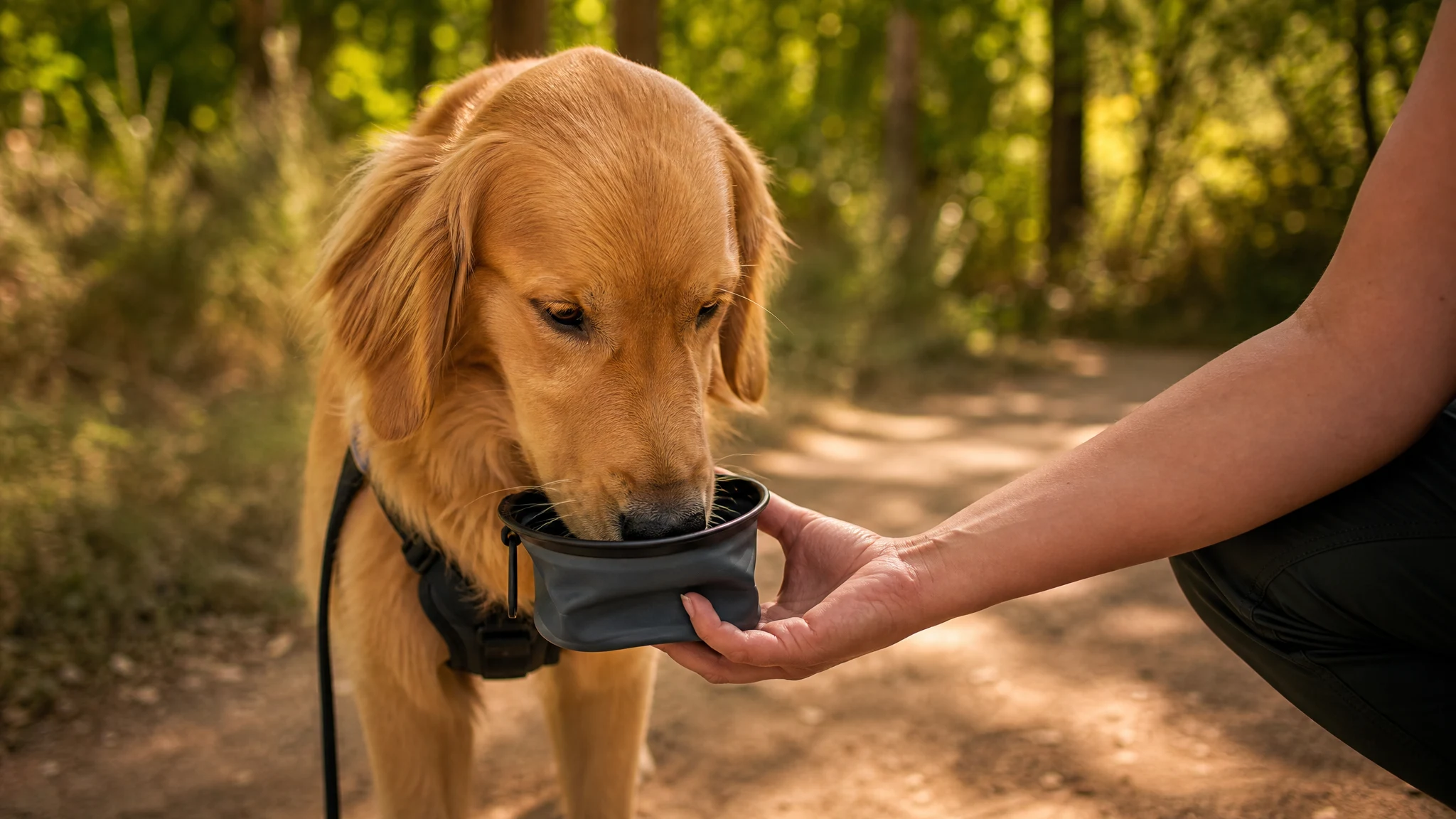
- A collapsible water bowl and plenty of fresh drinking water for every outing.
- A towel or damp cloth for cooling and wiping paws.
- Dog booties, if you want to try them (optional).
- Waste bags for every dog.
Step 1: Teach a Reliable "Leave It"
"Leave it" helps with many hazards. It covers a pond your dog wants to drink from, a dead animal on the trail, or a plant your dog wants to chew.
- Hold a treat in a closed fist. Let your dog sniff and paw at it. Stay quiet.
- The moment your dog pulls away, even for a second, say "yes" and give a different treat from your other hand.
- Repeat until your dog backs off from the fist right away.
- Add the cue "leave it" just before you present the fist.
- Next, place a treat on the floor under your hand. Reward the dog for ignoring it.
- Finally, practice with the treat uncovered on the floor, then on walks with safe distractions.
Why it matters in Aurora: Toxic algae is the documented water hazard here. A dog that will turn away from the shoreline on cue gives you a safer margin. Check current Colorado Parks and Wildlife (CPW) and CDPHE advisories before letting your dog near any reservoir.
Step 2: Build a Recall You Can Use Near Water and Open Space
A good recall lets you call your dog away from the water's edge, from wildlife, or from a spot that looks unsafe.
- Pick a short, happy cue such as "Here!" and use it only for recall.
- Start indoors. Say the cue, back away a few steps, and reward lavishly when your dog arrives.
- Move to the yard on a long line. Call, reward, and release your dog back to play.
- Practice in places with mild distractions, then harder ones, always on a leash where the law or the area requires it.
- Never call your dog to scold them. Coming to you should always be good news.
If you use the Cherry Creek State Park Dog Off-Leash Area, CPW says dogs must stay within visual distance and under voice control. CPW also says the area is not fully fenced. Recall is not optional there. CPW lists a Dog Off-leash Daily Pass at $3 and an Annual Pass at $25, plus a park entrance pass for vehicles. The CPW page also notes a closure from Oct. 26 to 30, with reopening on Oct. 31, so check the page before you go.
Aurora also has fenced options listed by Visit Aurora, including Grandview Dog Park (17500 E Quincy Ave), Bicentennial Park Off-Leash Area (13600 E Bayaud Ave) and Singletree Park Dog Area (19590 E 58th Ave). They are good places to practice recall in a more contained setting. Confirm current hours and conditions before you go.
Step 3: Get Your Dog Comfortable With Paw Handling
Paws take the brunt of hot ground, rough terrain and debris. A dog who accepts paw handling is much easier to check after a walk.
- Touch your dog's shoulder, then reward. Slowly work down the leg over several short sessions.
- Touch a paw for one second, then reward. Build to holding it gently for a few seconds.
- Spread the toes and look between them, rewarding each time your dog stays relaxed.
- Add a damp cloth wipe, then reward.
- Stop at the first sign of stress, such as pulling away, stiffening or lip licking. Go back a step.
After outings, look at the pads and between the toes. If you see redness, blisters, cuts, limping or constant licking, call your veterinarian. Do not wait for it to pass.
Step 4: Practice a Cooling Routine
This section covers walking a dog in heat and the problem of hot pavement. This guide does not give a local temperature threshold. Aurora's agencies did not provide one in the sources used here. Ask your veterinarian what is safe for your dog's age, size, coat and health.
- Check the ground first. Press the back of your hand on the pavement for several seconds. If it is uncomfortable for you, it is not a good surface for bare paws.
- Choose your time. Early morning and late evening are usually easier on dogs than midday. Shaded, grassy routes are gentler than long stretches of asphalt.
- Teach a settle on a mat. Reward your dog for lying on a mat in the shade. Use it at benches, patios and trailheads so your dog learns to rest on cue.
- Build water-break habits. Stop at regular points, offer water, and reward your dog for taking a calm break.
- Practice a cool-down. At home, get your dog used to a damp towel on the chest and belly. Make it a treat-paired routine so it is easy to do outside.
- Know when to stop. Heavy panting, drooling, stumbling, vomiting or collapse are signs to get your dog out of the heat and call a veterinarian right away.
Step 5: Introduce Booties Gradually (Optional)
Some dogs accept booties and some never do. If you want to try them, go slowly.
- Let your dog sniff a bootie and reward them for calm interest.
- Put one on for a few seconds, reward, and take it off.
- Build to all four feet for short indoor sessions with treats.
- Walk a few steps indoors, then outside on a quiet surface.
- Check fit often. Booties that rub or twist can cause sores.
Booties are not a substitute for avoiding hot ground. Ask your veterinarian whether they suit your dog.
Step 6: Plan Around Water Hazards
Before heading to any reservoir shoreline, check the latest CPW and CDPHE advisories. If a bloom is reported, stay away from the water. This applies to dogs that love to swim.
- Practice "leave it" and recall away from the water first, using the steps above.
- Bring fresh water so your dog is less tempted to drink from a lake or pond.
- Keep your dog leashed unless you are in a designated off-leash area.
- If your dog has been in or near water and then vomits, seems weak, or acts oddly, contact a veterinarian immediately.
Hazards to Ask About Locally
The sources used for this guide do not document the following for Aurora. Ask your veterinarian and local agencies about them.
- Foxtails and grass seeds: Paw handling and a quick post-walk check help you spot trouble early.
- Valley fever: Ask your veterinarian whether it is a concern where you live.
- Wildlife: Recall and "leave it" are your main tools. Keep your dog leashed and do not approach animals.
- Cold and de-icing products: Paw wipes and booties practice can help in winter. Ask your veterinarian about products used on roads and walkways.
Tips for Success
- Keep sessions short, about five minutes, and end on a win.
- Use rewards your dog truly values, especially outdoors.
- Practice at home first, then add distractions slowly.
- Use humane, reward-based methods. The American Veterinary Society of Animal Behavior (AVSAB) supports reward-based training and advises against aversive tools.
- If you want help, see our guide to dog training in Aurora, including classes, costs and how to choose.
Common Mistakes to Avoid
- Walking at midday out of habit. Adjust your schedule when it is warm.
- Assuming a fit dog does not overheat. Any dog can.
- Skipping the ground check. A surface that looks fine may be too hot.
- Letting a dog off leash without a reliable recall. Aurora's leash rule applies outside designated areas.
- Forcing booties or paw handling. Pressure usually makes dogs more resistant.
- Using harsh corrections. They can raise fear and make safety skills harder to build.
- Ignoring licensing and rabies requirements. The City of Aurora Animal Services says dogs over 6 months must be licensed through the Aurora Animal Shelter and be current on rabies vaccination. Check the Licenses page for current fees.
What to Expect
With regular, short practice, many dogs become more comfortable with paw checks and cooling routines within a few weeks. Recall and "leave it" usually take longer, particularly around strong distractions like water and wildlife. Results vary by age, breed, history and how often you practice.
These skills can reduce risk, but they cannot remove it. Conditions change, so keep checking advisories and watch your dog.
If your dog shows signs of heat illness, poisoning or another medical emergency, see a veterinarian right away. If your dog shows aggression toward people, talk with your veterinarian and a certified behavior professional.